
Redefining the Global EV Mobility Market Amid Policy, Strategy, and Technological Shifts
Market Sector Profile: The EV Mobility Market

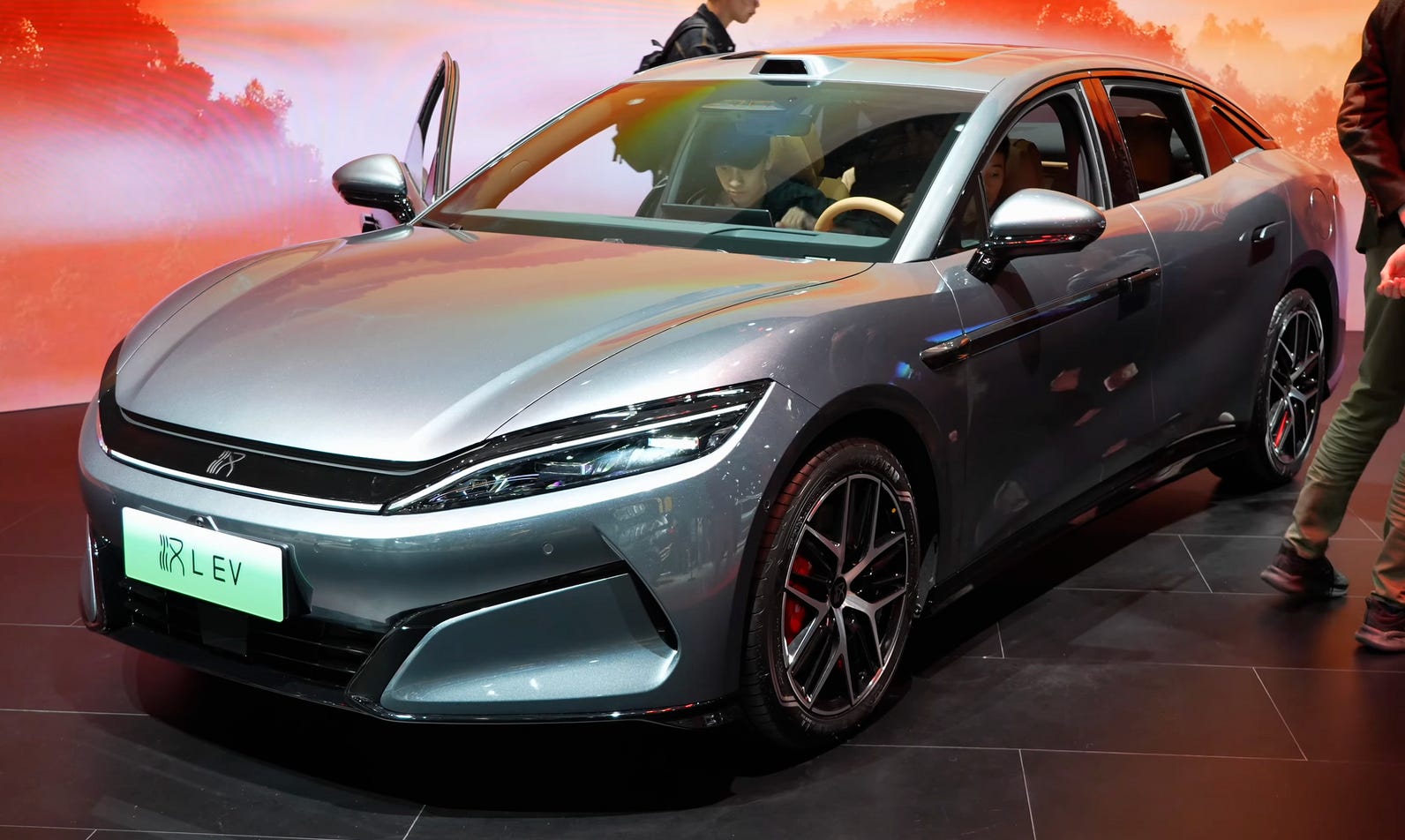
The world’s electric vehicle sector is at a crossroads. Not only are two titans, China’s BYD and America’s Tesla, vying for market dominance, but the very definition of leadership is changing amid shifting priorities, slowdowns, and bold pivots. The outcome of this competition could redefine how the U.S. and China move, innovate, and allocate resources for decades.
From EV Vanguard to Strategic Pivots: The Evolving Tesla Playbook
Tesla’s earliest “Master Plans” focused on affordable electric mobility. It proposed using revenue from high-end sports cars to build mass-market EVs, push fleet electrification, and ultimately eliminate fossil fuels. For years, Tesla played the innovation game brilliantly, launching the Model S and Model 3, setting global benchmarks in range, performance, and charging, and converting a generation of early adopters.
But the most recent Master Plan 4, released in September 2025, marks a radical pivot. Instead of putting EVs front and center, Tesla now emphasizes AI, robotics, and a vision of “sustainable abundance,” a future grounded as much in algorithmic innovation as propulsion systems. If you were expecting fresh Model Y bodywork, affordable sedans, or a disruptive new battery, you may be disappointed. The plan’s core ambitions now revolve around:
Expanding AI-driven products, especially autonomous robots and mobility systems, like the Optimus humanoid and Robotaxi concepts.
Unifying hardware and software to deliver new mass-market offerings at unprecedented scale.
Making autonomy central to human progress, with little clarity on how this translates to new vehicles vs. value-added platforms.
In short, Tesla is betting on an “AI plus manufacturing equals abundance” future; a future where vehicles (increasingly autonomous) are a springboard, not the endgame. EVs are no longer the company’s core vision; the focus is on bringing artificial intelligence into the physical world.
This pivot is not just a reflection of Musk’s own interests; it mirrors the very real slowdowns in global EV sales and an aging, less differentiated product lineup. Tesla may be a market leader, but it’s recalibrating. The move makes strategic sense as revenue from car sales plateaus and threats from agile rivals multiply.
BYD: China’s Champion—Mastering Scale, Integration, and Policy Alignment
On the other hand, BYD’s meteoric rise has been driven by almost the opposite playbook: An unwavering focus on physical scale, cost leadership, and rapid internationalization. As of this fall, BYD leads global EV sales, exporting more cars than ever to Europe, Southeast Asia, and Latin America. While Tesla pivots to AI, BYD is striving for manufacturing precision, logistics power, and ultra-fast charging.
Recently, however, BYD has faced its own speed bumps: consecutive monthly production declines for the first time since 2020. Analysts attribute this performance partly to strategic slowdowns. BYD is intentionally easing factory output to avoid dealer pushback, unsold inventory, and problematic “zero-mile” EV exports registered as new in China. As China’s home market cools, BYD is investing more abroad, sensing opportunities as the rest of the world races to catch up.
BYD’s strengths include:
Vertical integration—a mastery of battery, powertrain, and semiconductor supply chains;
Cost and logistics leadership—lower costs and faster export capacity;
Strong government backing—policy incentives, infrastructure buildouts, and centralized planning;
Ultra-fast charger R&D—driving convenience and customer adoption;
Broad product portfolio—from entry-level to premium, serving a wide spectrum of needs.
BYD’s strategy reflects the advantages of China’s top-down approach to supporting strategic industries: rapid nationwide infrastructure deployment, strategic resource allocation, and a policy environment that promotes mass adoption. Its agility abroad is a hedge against domestic saturation and signals increased ambition to challenge Western incumbents.
Structural Forces: China’s Coordination vs. U.S. Decentralization
The divergence in company strategies mirrors the structural differences between China’s and the U.S’s approach to strategic global innovation sectors:
China’s system privileges quick, coordinated deployment. When policymakers back EV adoption, they can push nationwide charging networks, standardize incentives, and champion national champions like BYD. Modern infrastructure, government subsidy schemes, and regulatory flexibility mean innovation can scale fast, with visible impact.
The U.S., by contrast, remains decentralized and market-oriented. Tesla must navigate autonomous state and city policies, outdated grid infrastructure, complex regulatory processes, and cultural priorities around privacy and individual choice. While America excels at foundational innovation and entrepreneurship, nationwide rollout is slower, more fragmented, and sometimes controversial. Tesla, as both disruptor and brand leader, is simultaneously hemmed in by these realities.
Tesla’s new focus on AI, autonomy, and robotics is in part a smart adaptation to these policy realities. When the car becomes a robot, and transportation becomes a software service, scaling depends less on government alignment and more on data, code, and global network effects.
Strengths, Weaknesses, Prospects: A Global Perspective
BYD -
Strengths: Unmatched production scale, cost competitiveness, vertical integration, policy support, export logistics, and a focus on core mobility.
Weaknesses: Brand is less aspirational outside China, innovation is incremental, faces regulatory and trust hurdles internationally, and is vulnerable to domestic market saturation.
Tesla -
Strengths: Iconic brand, technological leadership in autonomy/software, premium positioning, Supercharger network, direct sales model, and strong Western market share.
Weaknesses: Recent plateau in EV innovation, exposed to supply chain risks, competitive headwinds from Chinese manufacturers, and mixed results with legacy infrastructure.
Future Potential? -
BYD is well-positioned to consolidate its global mass-market leadership, especially as emerging regions electrify. Its capacity to rapidly build factories, scale exports, and deliver reliable vehicles at affordable prices places it ahead of rivals who struggle with cost and logistics.
Tesla’s future rides on how successfully it transitions from “EV manufacturer” to “autonomous hardware-as-service innovator.” If the Robotaxi platform, Optimus, and AI-driven solutions gain traction, Tesla could become as much a creator of smart machines as vehicles, potentially unlocking new business models and growth beyond cars.
Conclusion: Two Giants, Two Systems, One Race for the Future
BYD and Tesla encapsulate not just different corporate goals but different national models for how technology is deployed. China’s high-speed, policy-aligned progress propels BYD, even amid its current slowdown, while the U.S.’s slower, less uniform deployment makes Tesla’s pivot necessary and perhaps, transformative.
Whether we are entering a future led by advanced AI, humanoid robotics, or ultra-fast, reliable mass mobility will depend on how these companies navigate changing market needs and the policy/infrastructure environments that shape their choices. Investors and founders should watch how scale, brand, and innovation continue to jostle, while asking themselves which underlying system is better suited for the next wave of global transformation.
As autumn 2025 draws to a close, the EV race is morphing into something larger: a contest not just of cars, but of what companies and societies dream possible. The next chapter is being written now, and its implications go far beyond EV car consumers.